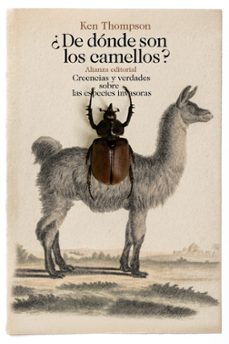
En el lapso de nuestra existencia, vemos la flora y la fauna que nos rodean como algo natural: plantas y animales que damos por hecho son autóctonos del lugar y que siempre han estado allí. Sin embargo, esto no es asi. Asociamos los camellos con Africa y Asia, pero la especie aparecio en America del Norte y los unicos dromedarios salvajes se encuentran en Australia. Algunas de estas especies que hoy creemos autoctonas fueron en su dia "invasoras" y desalojaron a otras "nativas". Estas contradicciones obligan a replantearnos la muy presente cuestion del peligro y los trastornos que suponen las llamadas "especies invasoras" como otra cara de la biodiversidad. En este libro fascinante Ken Thompson examina a traves de una multitud de casos la cuestion de hecho que formulan estas especies y deja en el aire, asimismo, la pregunta de si nuestros actuales temores al respecto no pueden ser, a la larga, contraproducentes.En el lapso de nuestra existencia, vemos la flora y la fauna que nos rodean como algo natural: plantas y animales que damos por hecho son autóctonos del lugar y que siempre han estado allí. Sin embargo, esto no es asi. Asociamos los camellos con Africa y Asia, pero la especie aparecio en America del Norte y los unicos dromedarios salvajes se encuentran en Australia. Algunas de estas especies que hoy...
Cualquier cosa que se tira, que haya estado viva y pueda reciclarse, puede convertirse en compost, y este libro le demuestra lo fácil que es prepararlo. Averigüe cómo construir un compostador sencillo, seleccionar las mejores herramientas para la tarea, y saber cuál es la mezcla correcta para el tamaño del huerto. Una guía práctica para transformar los residuos del hogar y del huerto en fertilizante ecológico. Por muy reducido que sea el espacio del que disponga, puede influir en el medio ambiente convirtiendo los residuos verdes en abono para el huerto. La producción de compost no sólo es sencilla y gratificante, sino que además no tendrá que gastar dinero en caros acondicionadores de suelo y acolchados. Pocas cosas son mejores para las plantas y el medio ambiente que un compost de huerto casero; pero, ¿por qué nunca resulta tan fácil producirlo como nos quieren hacer creer los expertos? Tal vez haya que culpar sobre todo a las expectativas poco realistas, junto con el anhelo actual por conseguir resultados inmediatos. Pero no desesperen; este libro erradica el misterio y la preocupación en torno a la elaboración de compost.
What is the best way to kill weeds in paving? How scared should we really be of Japanese knotweed? And what is a weed anyway? Biologist Ken Thompson set out to write a different kind of gardening column, one that tackles what he calls the grit in the gardening oyster. In this new collection he takes a look at some of the questions faced by gardeners everywhere in a bid to sort the truth from the wishful thinking. Why are the beaks of British great tits getting longer? Which common garden insect owns a set of metal-tipped running spikes? Why might growing orange petunias land you in hot water? Are foxes getting bigger? How do you stop the needles falling off your Christmas tree? This experts miscellany of (mostly) scientifically-tested garden lore will make you look at your garden through fresh eyes.
How are birds linked to house prices?How can a gardener improve theflavour of their vegetables?Do wildflowers really thrive in poor soil? In this collection of articles from The Telegraph, biologist and gardening columnist Ken Thompson takes a scientific look at some of the greater and lesser questions faced by gardeners everywhere in a bid to sort the genuine wisdom from the hokum. What is the ideal temperature for a compost heap? What do bees do that improves strawberries? Why are gardeners in literature always such dummies? This is an experts gardening miscellany, aimed at making you not necessarily a better gardener, but probably a far more thoughtful one.
Most of us think of Darwin at work on The Beagle, taking inspiration for his theory of evolution from his travels in the Galapagos. But Darwin published his Origin of Species nearly thirty years after his voyages and most of his labours in that time were focused on experimenting with and observing plants at his house in Kent. He was particularly interested in carnivorous and climbing plants, and in pollination and the evolution of flowers. Ken Thompson sees Darwin as a brilliant and revolutionary botanist, whose observations and theories were far ahead of his time - and are often only now being confirmed and extended by high-tech modern research. Like Darwin, he is fascinated and amazed by the powers of plants - particularly their Triffid-like aspects of movement, hunting and 'plant intelligence'. This is a much needed book that re-establishes Darwin as a pioneering botanist, whose close observations of plants were crucial to his theories of evolution.