On the first day of the New Year, no one dies. This understandably causes great consternation amongst religious leaders – if there’s no death, there can be no resurrection and therefore no reason for religion – and what will be the effect on pensions, the social services, hospitals? Funeral directors are reduced to arranging funerals for dogs, cats, hamsters and parrots. Life insurance policies become meaningless. Amid the general public, on the other hand, there is initially celebration: flags are hung out on balconies and people dance in the streets. They have achieved the great goal of humanity – eternal life. But will death’s disappearance benefit the human race, or will this sudden abeyance backfire? How long can families cope with malingering elderly relatives who scratch at death’s door while the portal remains firmly shut? Then, seven months later, death returns, heralded by purple envelopes informing the recipients that their time is up. Death herself is now writing personal notes giving one week''s notice. However, when an envelope is unexpectedly returned to her, death begins to experience strange, almost human emotions. In his new novel José Saramago again turns the world on its head – an everyday event is snatched away, and humankind is left to make of it what it will.
Ficha técnica
Editorial: Arrow (Random)
ISBN: 9780099502487
Idioma: Inglés
Número de páginas: 304
Tiempo de lectura:
6h 15m
Encuadernación: Tapa blanda
Fecha de lanzamiento: 02/02/2009
Año de edición: 2009
Plaza de edición: London
Especificaciones del producto
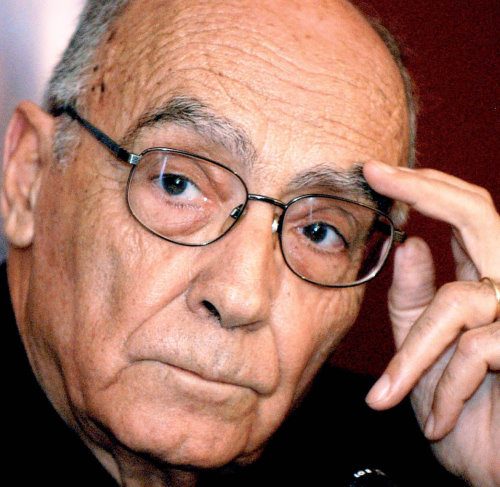
Escrito por José Saramago
José Saramago (Azinhaga, 1922-Tías, Lanzarote, 2010) es uno de los escritores portugueses más conocidos y apreciados en el mundo entero. En España, a partir de la primera publicación de El año de la muerte de Ricardo Reis, en 1985, su trabajo literario recibió la mejor acogida de los lectores y de la crítica. Otros títulos importantes son La viuda, Manual de pintura y caligrafía, Levantado del suelo, Memorial del convento, Casi un objeto, La balsa de piedra, Historia del cerco de Lisboa, El Evangelio según Jesucristo, Ensayo sobre la ceguera, Todos los nombres, La caverna, El hombre duplicado, Ensayo sobre la lucidez, Las intermitencias de la muerte, El viaje del elefante, Caín, Claraboya y Alabardas. Alfaguara ha publicado también Poesía completa, Cuadernos de Lanzarote I y II, Viaje a Portugal, el relato breve El cuento de la isla desconocida, el cuento infantil La flor más grande del mundo, el libro autobiográfico Las pequeñas memorias, El Cuaderno, José Saramago en sus palabras, un repertorio de declaraciones del autor recogidas en la prensa escrita, El último Cuaderno, Qué haréis con este libro. Teatro completo y El Cuaderno del año del Nobel. Recibió el Premio Camões y el Premio Nobel de Literatura.