Àlex Masllorens és periodista i ha exercit la professió en diferents mitjans de comunicació escrita i audiovisual, entre els quals El Ciervo, El Correo Catalán, Avui i TVE. És autor de diversos llibres, tan de ficció com d’assaig i entre aquests últims s’hi troba 'La herència política y humana de Enrique Tierno Galván', un altre volum dedicat a la figura de l’alcalde madrileny.
Recibe novedades de ALEX MASLLORENS directamente en tu email

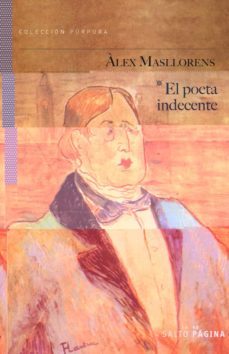
¿Qué tuvieron en común Oscar Wilde y Toulouse-Lautrec? ¿Qué puede unir todavía hoy a ambos genios con el historiador de arte Richard Ziegler, hijo de una alemana que convivió con el régimen nazi? ¿Y que puede relacionar, a su vez, a todos ellos con Sara Klein, hija de judios alemanes que tuvieron que abandonar su pais, lucharon en la Resistencia y acabaron muriendo en la guerra? ¿Que papel juegan tambien en esta historia el catalan Josep Oller, fundador del celebre Moulin Rouge de Paris y los escritores Thomas Mann y Henry James?
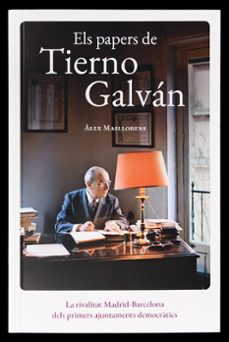
It is an attempt to look back at the figure of Enrique Tierno Galván, with all the light and shade that surrounded him, in his personal and political life. It also offers an analysis of the relations between Madrid and Barcelona as well as between their mayors, Enrique Tierno Galvan, Narcis Serra and Pasqual Maragall always characterised by both collaboration and rivalry. This was made possible by the first ever examination of the documents in Enrique Tierno Galvans personal archive, given to Barcelonas Arus Public Library by his son.Beyond the figure of Tierno Galvan, the book places special emphasis on the sometimes fraught relationship the politician maintained with the city of Barcelona and, more specifically, with its mayors, Serra and Maragall. A review of the relevant periodicals library and archives reveal how they joined forces to overcome their respective empty municipal coffers and which were the most urgent and widest-reaching measures implemented in each city.The book goes over the different stages in Tiernos life in chronological order: the Spanish Civil War and the postwar period in Madrid; his anti-Francoist activism; his contact with the people close to Juan de Borbon in order to pave the way for the evolution from the Francoist regime to a parliamentary democracy; his brief time with the PSOE, from which he was expelled; his creation of the Partido Socialista del Interior, and then the Partido Socialista Popular; and, later, his nomination as a candidate for office at City Hall before, against all odds, he became the first mayor of Madrid after the restoration of municipal democracy.