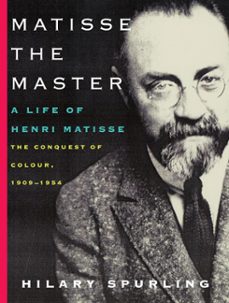
"If my story were ever to be written down truthfully from start to finish, it would amaze everyone," wrote Henri Matisse. It is hard to believe today that Matisse, whose exhibitions draw huge crowds worldwide, was once almost universally reviled and ridiculed. His response was neither to protest nor to retreat; he simply pushed on from one innovation to the next, and left the world to draw its own conclusions. Unfortunately, these were generally false and often damaging. Throughout his life and afterward people fantasized about his models and circulated baseless fabrications about his private life. Fifty years after his death, "Matisse the Master" (the second half of the biography that began with the acclaimed "The Unknown Matisse")" "shows us the painter as he saw himself. With unprecedented and unrestricted access to his voluminous family correspondence, and other new material in private archives, Hilary Spurling documents a lifetime of desperation and self-doubt exacerbated by Matisse's attempts to counteract the violence and disruption of the twentieth century in paintings that now seem effortlessly serene, radiant, and stable. Here for the first time is the truth about Matisse's models, especially two Russians: his pupil Olga Meerson and the extraordinary Lydia Delectorskaya, who became his studio manager, secretary, and companion in the last two decades of his life. But every woman who played an important part in Matisse's life was remarkable in her own right, not least his beloved daughter Marguerite, whose honesty and courage surmounted all ordeals, including interrogation and torture by the Gestapo in the Second World War. If you have ever wondered how anyone withsuch a tame public image as Matisse could have painted such rich, powerful, mysteriously moving pictures, let alone produced the radical cut-paper and stained-glass inventions of his last years, here is the answer. They were made by the real Matisse, whose true story has been written down at last from start to finish by his first biographer, Hilary Spurling.
Otoño de 1940: ha estallado la Segunda Guerra Mundial. Llueven bombas sobre Londres; los teatros han cerrado, y de noche reina la oscuridad por miedo a la aviación enemiga. Una joven rubia y pálida, que parece salida de un lienzo de Renoir, acaba de aceptar la oferta laboral de Horizon, una revista que se erigirá en referente cultural europeo. Entre otros destacados escritores, allí conocerá a su primer marido, George Orwell. Vivaz, atractiva, amiga de los intelectuales, pensadores y artistas más relevantes de su tiempo, Sonia Orwell (1918-1980) vivió en un mundo donde a la mujer sólo se le concedía un papel accesorio. Escindida entre su vulnerabilidad íntima y su coraje externo, el indomable tesón con que administró el legado literario de Orwell le valió pasar a la historia envuelta en rasgos negativos. En Sonia Orwell, Hilary Spurling ahonda en el claroscuro vital de una mujer radiante y perfeccionista, enérgica y decidida, que una vez escribió: "Para mí, la inteligencia es una forma como otra cualquiera de obsesión."
Emparentada con un político progresista de renombre, dueña de una fabulosa fortuna, anfitriona de las personalidades más destacadas del momento, Thérèse Humbert se encontraba en el vértice de un notorio escándalo que extendía sus raíces hasta sombrías profundidades políticas y financieras.
En la mitología feminista hoy parece no haber sitio para Pearl S. Buck (1892-1973). Sin embargo fue la primera escritora norteamericana en ganar un Nobel de Literatura y durante dos años consecutivos encabezó la lista de libros más vendidos en Estados Unidos con su primera novela "La buena tierra". En esta biografía la autora se centra en los años que moldearon a la escritora.
Este magno y exhaustivo análisis de Hilary Spurling, premiada por esta obra con el codiciado Premio Whitbread, recorre con minucia la vida y la trayectoria de Matisse, y ésta demuestra ser la mejor manera para comprender tanto las obras individuales del pintor como su impresionante trayectoria y la evolución de sus ideas respecto a las artes plásticas. No sólo nos encontramos ante la más completa y definitiva biografía de uno de los pintores más célebres, sino de un espléndido retrado de los ambientes artísticos en que se desarrolló su obra. A esto se une una investigación muy rigurosa con información inédita del artista procedente de entrevistas y el talento narrativo de Spurling al entreverar la evolución biográfica y personal con la artística.