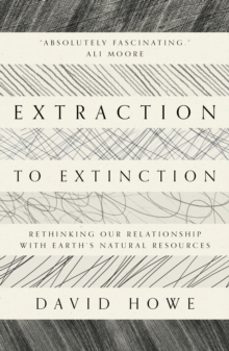
Everything we use started life in the earth as a rock or a mineral vein a layer of an ancient seabed or the remains of a long extinct volcano Humanity s ability to fashion nature to its own ends is by no means a new phenomenon Silica rich rocks have been flint knapped by Stone Age people transformed into stained glass in medieval times and made into silicon chips for computers in the Digital Age Our trick of turning rocks rich in malachite and chalcopyrite into copper has taken us from Bronze Age Minoan vases to the wiring that powers modern day machinery Today we mine quarry pump cut blast and crush the Earth s resources at an unprecedented rate We shift many times more rock soil and sediment each year than the world s rivers and glaciers wind and rain combined Plastics alone now weigh twice as much as all the marine and terrestrial animals around the globe We have become a dominant even dangerous force on the planet In EXTRACTION TO EXTINCTION David Howe traces our environmental impact through time to unearth how our obsession with endlessly producing and throwing away more and more stuff has pushed the planet to its limit And he considers the question what does the future look like for our depleted world
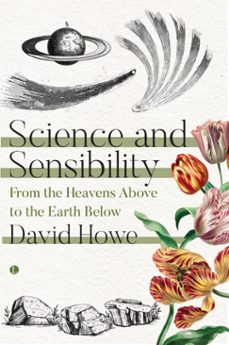
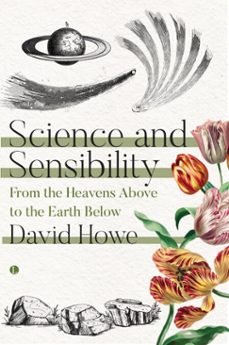
In an outer arm of the spiralling Milky Way galaxy can be seen an insignificant speck. This is our home, planet Earth. Its skies, clouds, lands and seas, and indeed life itself have long drawn the interest of scientists and artists alike. Our cultural and scientific history is evidence enough that curiosity and wonder are the twin drivers of both scientific and artistic imaginations. In Science and Sensibility, David Howe unveils the stories of the scientists who helped to make sense of the stars, clouds, life, rocks, and the elements, and weaves their tales with the thoughts and feelings of artists who found meaning as they experienced natures beauty, grandeur and mystery. Scientific greats such as James Hutton, Charles Darwin, Dmitri Mendeleev, Gregor Mendel and Annie Jump Cannon all the way up to todays leading scientists are complemented by the literary insights of people such as William Wordsworth, Jorge Luis Borges and Iris Murdoch. Readers are encouraged to embrace what the sciences and the arts can reveal together. In doing so, the earth below and the heavens above become brighter and richer. The wonder and curiosity embodied in Science and Sensibility could perhaps take us a step closer to holding Infinity in the palm of your hand / and Eternity in an hour.
Quienes ejercen en el ámbito del trabajo social han de ser capaces de tratar con personas que, en sus relaciones interpersonales, o bien se sientan afligidas o bien causen aflicciones a los demás. Con todo, la cualidad y el caracter de estas relaciones -ya sea entre compañeros, entre los dos miembros de una pareja o entre padres e hijos- suelen estar profundamente enraizadas en la historia de la educacion emocional de los propios individuos: con demasiada frecuencia, ciertas experiencias relacionales adversas acaecidas durante la infancia pueden provocar trastornos en la vida adulta. A traves de un analisis comprehensivo y penetrante de las teorias y de la investigacion generadas alrededor de la teoria del vinculo y la psicologia del desarrollo, este importante libro facilitara a todos los trabajadores sociales tanto la comprension como la evaluacion de la naturaleza y los origenes de todo tipo de relaciones emocionales trastornadas o inadaptadas. Finalmente, la minuciosa revision de los conceptos y las teorias esenciales del trabajo social les ofrecera una base al tiempo sofisticada y accesible desde la cual poder llevar a cabo valoraciones y practicas profesionales llenas de sensibilidad e inteligencia.