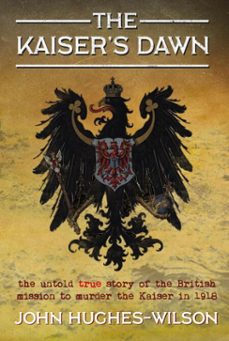
In mid summer 1918 a top secret mission, which has remained classified information for a century, was set in motion to kill Kaiser Wilhelm II. It was felt that by killing their head of state and commander in chief it would serve as a mortal blow to the German forces and they would collapse very quickly after the assassination. The facts are borne out in never-before-published notebooks, maps and pilots flying records, kept secret for a hundred years. The implications of this secret attack raise many new and explosive - questions. Exactly who ordered an attack to kill the Kaiser? Was it sanctioned by the C-in-C, Sir Douglas Haig? By the War Office? Was the King informed of the attempt to kill his royal cousin? Was Lloyd George, the Prime Minister asked? We do not know; but someone in London must have sanctioned the attack. The Official History makes no mention of any attack, and public records say nothing.John Hughes-Wilson has woven an exciting and well-paced historical novel to mark this centennial event from the research on discovering this mission. The story, based on true events, looks at this long hidden secret and puts it into the context of the time. It explores areas rarely examined: secret service operations in 1914-18; dirty, undercover intelligence work; the very real political intrigues between Whitehall and the generals and the heroics of the aircrew of the day, whose life expectancy at one point in 1917 was only eleven days in action.
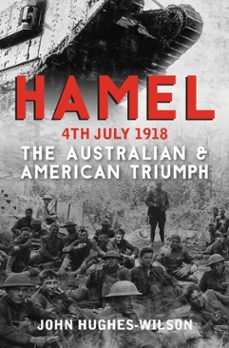
The Battle of Hamel is arguably, the most important battle of the First World War yet it is still relatively unknown. It was turning point of the Great War and saw American troops fighting alongside Australian troops in their first taste of war on foreign soil, making the reputation of the man who led the troops, General Monash of the Australian Army.In the summer of 1918 the war was in the balance but the battle plan was beautifully conceived and executed, and without the Allies victory, Amiens would not have been possible.It is special for three reasons, firstly it lasted only ninety minutes with very few casualties. Secondly it was the battle that set up the troops for Amiens after which the Germans were rolled back to Berlin. Finally and most importantly it is the first time American troops fought on foreign soil and really entered international politics.Formerly on the course at Sandhurst it has now been replaced by more modern examples but Hamel is still the perfect battle a century on, superbly prepared. When most battles are fought the original plans go out of the window, not so with Hamel.
Lee Harvey Oswald, whatever anyone says, could not possibly have been the lone assassin of JFK in 1963. And John Hughes-Wilson, a former senior British Intelligence officer, not only names names, but also identifies the shadowy plotters who palnned the elimination of the president. The trail leads ot the very heart of the US government. The organisations most threatened by the Kennedy brothers were the oil barons of Texas, the CIA-controlled Cuban Amigrs and the Mafia. The Mob funded Vice President Lyndon Johnson's whole career as a senator. They even paid Richard Nixon's bills. They were also blackmailing J Edgar Hoover, Head of the FBI. This is a fascinatingly murky tale, summed up in a carefully ambiguous letter from LBJ to one of the leaders of the Dallas oil men, which says, 'If certain obstacles were to be removed ...
The book that gives an insider's view of some of the great intelligence blunders of recent history. Including Stalin's Operation Barbarossa, Hitler being misled by his own intelligence staff, the bungling that enabled an attack on Pearl Harbor, lack of preparation for the Viet Cong's offensive 1968, Arab Israeli war 1973, Falkland Islands, Gulf War 1991...New material to include: The US failure to run warning system before 9/11; the War on Terrorism; the Islamic Terrorist threat; mis-use of intelligence by UK government in War with Iraq; intelligence problems of Middle East; challenges of 21st century.