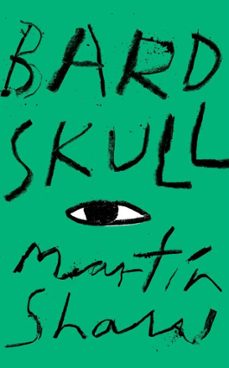
Bardskull is the record of three journeys made by Martin Shaw, the celebrated storyteller and interpreter of myth, in the year before he turned fifty. It is unlike anything he has written before. This is not a book about myth or narrative; rather, it is a sequence of incantations, a series of battles.Each of the three journeys sees Shaw walk alone into a Dartmoor forest and wait. What arrive are stories fragments of myth that he has carried within him for decades: the deep history of Dartmoor itself; the lives of distant family members; Arthurian legend; and tales from India, Persia, Lapland, the Caucasus and Siberia. But these stories and their tellers dont arrive as the bearers of solace or easy wisdom. As with all quests, Shaw is entering a domain of traps and tests.Bardskull can be read as a fable, as memoir, as auto-fiction or as an attempt to undomesticate myth. It is a magnificent, unclassifiable work of the imagination.
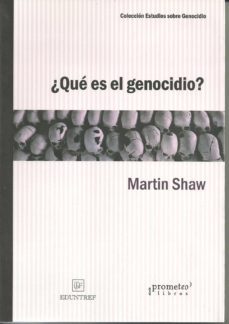
Este libro se refiere a la cuestión ¿cómo deberíamos entender la idea de genocidio? El genocidio ha sido un tema central de la política contemporánea en varias ocasiones durante las últimas dos décadas, especialmente por los casos de Bosnia y Ruanda. Su historia tambien ha sido una cuestion controversial en paises como Alemania, Japon y Turquia, a causa de la violencia homicida en las dos Guerras Mundiales, y en Norteamerica y Australia respecto de la violencia temprana contra los pueblos indigenas. El espectro del genocidio arquetipico, el Holocausto nazi, acecha las relaciones del siglo XXI entre israelies y palestinos. En muchos otros lugares del mundo contemporaneo se hacen acusaciones de genocidio y, casi invariablemente, son discutidas. Pocas ideas son tan importantes, pero en pocos casos el significado y la relevancia de un concepto clave cuentan con menor acuerdo