Science A Four Thousand Year History rewrites science s past Instead of focussing on difficult experiments and abstract theories Patricia Fara shows how science has always belonged to the practical world of war politics and business Rather than glorifying scientists as idealized heroes she tells true stories about real people men and some women who needed to earn their living who made mistakes and who trampled down their rivals in their quest for success Fara sweeps through the centuries from ancient Babylon right up to the latest hi tech experiments in genetics and particle physics illuminating the financial interests imperial ambitions and publishing enterprises that have made science the powerful global phenomenon that it is today She also ranges internationally illustrating the importance of scientific projects based around the world from China to the Islamic empire as well as the more familiar tale of science in Europe from Copernicus to Charles Darwin and beyond Above all this four thousand year history challenges scientific supremacy arguing controversially that science is successful not because it is always right but because people have said that it is right
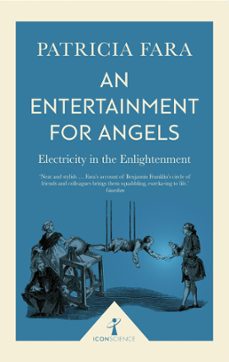
Electricity was the scientific fashion of the Enlightenment, an Entertainment for Angels, rather than for Men. Lecturers attracted huge audiences to marvel at sparkling fountains, flaming drinks, pirouetting dancers and electrified boys. Enlightenment optimists predicted that this new-found power of nature would cure illnesses, improve crop production, even bring the dead back to life. Benjamin Franklin, better known as one of Americas founding fathers, played a key role in developing the new instruments and theories of electricity during the eighteenth century. Celebrated for drawing lightning down from the sky with a kite, Franklin was an Enlightenment expert on electricity, developing one of the most successful explanations of this mysterious phenomenon. But Patricia Fara, Senior Tutor of Clare College Cambridge, reveals how the study of electricity became intertwined with Enlightenment politics. By demonstrating their control of the natural world, Enlightenment philosophers hoped to gain authority over society. And their stunning electrical performances provided dramatic evidence of their special powers.
Cuatro mil años de aventura científica y descubrimientos, desde las ancestrales Babilonia y China hasta la genetica y las partículas físicas. Breve historia de la ciencia es un relato fascinante de los acontecimientos, las historias y los intereses que hay detras de la teoria abstracta y los experimentos esotericos que componen la historia oficial de la ciencia. Pone de manifiesto que la ciencia siempre se ha dirigido hacia el mundo practico de la guerra, la politica y los negocios. Lejos de glorificar a los cientificos tradicionalmente encumbrados como heroes, el libro nos cuenta la verdadera historia de hombres y mujeres que necesitaban ganar dinero para vivir, que cometian errores y que, a veces, competian sin piedad con sus rivales para lograr el exito. El libro recorre cuatro milenios, desde la antigua Babilonia hasta los ultimos acontecimientos en fisica quantica. Breve historia de la ciencia reta la supremacia cientifica, muestra como los intereses financieros, las ambiciones imperiales y la creacion de corporaciones han sido los que han hecho de la ciencia el poderoso fenomeno global que es hoy en dia. Argumenta que la ciencia ha tenido exito, no siempre porque estaba en lo correcto, si no porque la gente ha aceptado que estaba en lo correcto.
When the imperial explorer James Cook returned from his first voyage to Australia, scandal writers mercilessly satirised the amorous exploits of his botanist Joseph Banks, whose trousers were reportedly stolen while he was inside the tent of Queen Oberea of Tahiti. Was the pursuit of scientific truth really what drove Enlightenment science? In Sweden and Britain, both imperial powers, Banks and Carl Linneaus ruled over their own small scientific empires, promoting botanical exploration to justify the exploitation of territories, peoples and natural resources. Regarding native peoples with disdain, these two scientific emperors portrayed the Arctic North and the Pacific Ocean as uncorrupted Edens, free from the shackles of Western sexual mores. In this absorbing (Observer) book, Patricia Fara reveals the existence, barely concealed under Banks and Linnaeus camouflage of noble Enlightenment, of the altogether more seedy drives to conquer, subdue and deflower in the name of the British Imperial state.