






















Profesor de Educación Matemática en la Facultad de Educación y miembro asociado del Departamento de Matemáticas de la Universidad Simon Fraser en Canadá. Es miembro del ejecutivo de la British Columbia Mathematics Teachers Association (BCAMT) y actual presidente del Grupo Internacional para la Psicología de la Educación Matemática. Consulta periódicamente con profesores, escuelas, distritos escolares y ministerios de educación sobre cuestiones de enseñanza y aprendizaje, aulas pensantes, evaluación y aritmética.
Recibe novedades de Peter Liljedahl directamente en tu email
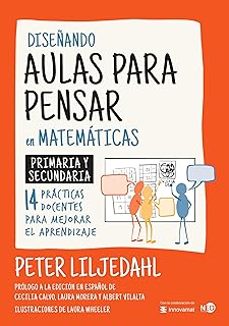
"A los profesores a menudo les resulta difícil implementar lecciones que ayuden a los estudiantes a ir más allá de la memorización y los cálculos repetitivos. De hecho, las normas y hábitos institucionales que impregnan todas las aulas pueden, en realidad, promover que los estudiantes tengan comportamiento de "no pensantes". Impulsado por la observacion sobre como los docentes luchan por implementar en las matematicas buenos ejercicios para involucrar a los estudiantes en el pensamiento profundo, Peter Liljedahl ha traducido sus 15 años de investigacion en esta guia practica sobre como avanzar hacia un aula pensante.Diseñando aulas para pensar en matematicas, Primaria y secundaria, ayuda a los docentes a implementar 14 practicas optimas para pensar que crean un entorno ideal para que se produzca un aprendizaje profundo de las matematicas."
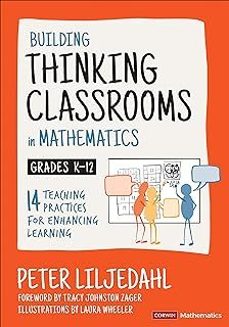
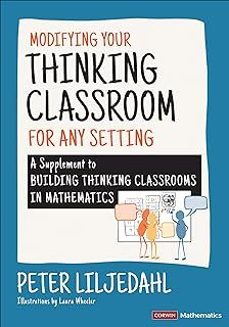
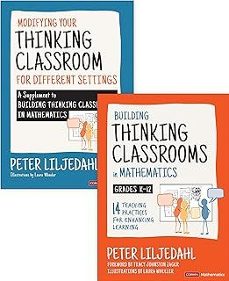
This bundle includes Liljedahls bestselling anchor book Building Thinking Classrooms in Mathematics, Grades K-12 and his new supplement title Modifying Your Thinking Classroom for Different Settings. Much of what happens in math classrooms today is guided by institutional norms laid down at the inception of an industrial-age model of public education. These norms have enabled a culture of teaching and learning that is often devoid of student thinking. Building Thinking Classrooms presents the results of over 15 years of research into which teaching practices are effective for getting students to think and which ones do not. This book takes you through a step-by-step approach that you can use to transform your classroom from a space where students mimic to a space where students think. But how do these practices work in a classroom with social distancing or in settings that are not always face-to-face? The follow-up supplement, Modifying Your Thinking Classroom for Different Settings, will answer those questions, and more. It walks teachers through how to adapt the 14 practices for 12 distinct settings, some of which came about as a result of the COVID-19 pandemic.
eep thinkingkeep learning in different settingsIn Peter Liljedahls bestselling Building Thinking Classrooms in Mathematics: 14 Teaching Practices for Enhancing Learning, readers discovered that thinking is a precursor to learning. Translating 15 years of research, the anchor book introduced 14 practices that have the most potential to increase student thinking in the classroom and can work for any teacher in any setting. But how do these practices work in a classroom with social distancing or in settings that are not always face-to-face? This follow-up supplement will answer those questions, and more. It walks teachers through how to adapt the 14 practices for 12 distinct settings, some of which came about as a result of the COVID-19 pandemic. This guide:
A thinking student is an engaged studentTeachers often find it difficult to implement lessons that help students go beyond rote memorization and repetitive calculations. In fact, institutional norms and habits that permeate all classrooms can actually be enabling "non-thinking" student behavior. Sparked by observing teachers struggle to implement rich mathematics tasks to engage students in deep thinking, Peter Liljedahl has translated his 15 years of research into this practical guide on how to move toward a thinking classroom. Building Thinking Classrooms in Mathematics, Grades K12 helps teachers implement 14 optimal practices for thinking that create an ideal setting for deep mathematics learning to occur. This guide