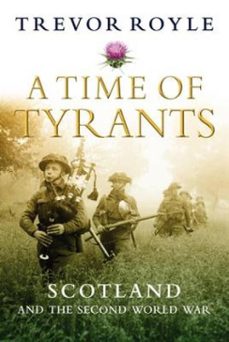
Trevor Royle examines Scotlands role in the Second World War from a wide range of perspectives. The countrys geographical position gave it great strategic importance for importing war materiel and reinforcements, for conducting naval and aerial operations against the enemy and for training regular and specialist SOE and commando forces. Scotland also became a social melting pot with the arrival of Polish and eastern European refugees, whose presence added to the communal mix and assisted post-war reconstruction. In addition to the important military aspects - the exploits of the Armys renowned 15th Scottish and 51st Highland Divisions in Europe and North Africa and the role played by the RAF and the Royal Navy from Scottish bases - Scotland was also hugely important as an industrial power house and the nations larder. The war also had a huge impact on politics, with national centralization achieved through the creation of the Scottish Office and the Scottish Grand Committee. With the emergence of the post-war Labour government and the welfare state,nationalism went into decline and the dominance of socialism, especially in the west, paved the way for the command politics which dominated Scotland for the rest of the century. Based on previously unseen archives in the Scottish Record Office, A Time of Tyrants is the first comprehensive history of the unique part played by Scotland and the Scots in the global war to defeat Nazi Germany and Imperial Japan.
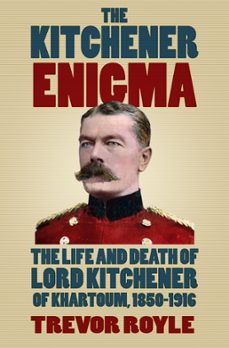
In this critically acclaimed biography, now fully updated, Royle revises Kitcheners latter-day image as a stern taskmaster, the ultimate war lord, to reveal a caring man capable of displaying great loyalty and love to those close to him. New light is thrown on his Irish childhood, his years in the Middle East as a biblical archaeologist, his attachment to the Arab cause and on the infamous struggle with Lord Curzon over control of the army in India. In particular, Royle reassesses Kitcheners role in the Great War, presenting his phenomenally successful recruitment campaign Your Country Needs You as a major contribution to the Allied victory and rehabilitating him as a brilliant strategist who understood the importance of fighting the war on multiple fronts.
Robert Louis Stevenson was a natural story-teller who could write about a range of topics in a spell-binding way. This collection of tales covers adventure, romance and wrong-doing.
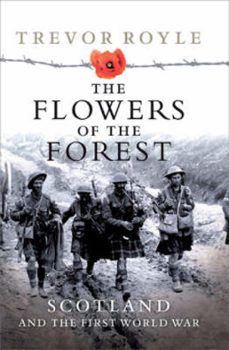
On the brink of the First World War, Scotland was regarded throughout the British Isles as the workshop of the Empire. Not only were Clyde-built ships known the world over, Scotland produced half of Britains total production of railway equipment, and the cotton and jute industries flourished in Paisley and Dundee. In addition, Scots were a hugely important source of manpower for the colonies. Yet after the war, Scotland became an industrial and financial backwater. Emigration increased as morale slumped in the face of economic stagnation and decline. The country had paid a disproportionately high price in casualties, a result of huge numbers of volunteers and the use of Scottish battalions as shock troops in the fighting on the Western Front and Gallipoli - young men whom the novelist Ian Hay called the vanished generation. In this book, Trevor Royle provides the first full account of how the war changed Scotland irrevocably by exploring a wide range of themes - the overwhelming response to the call for volunteers; the performance of Scottish military formations in 1915 and 1916; the militarization of the Scottish homeland; the resistance to war in Glasgow and the west of Scotland; and the boom in the heavy industries and the strengthening of womens role in society following on from wartime employment.