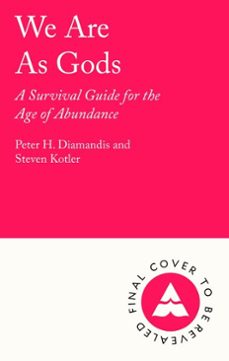
In 1968, Stewart Brand declared: We are as gods - and we might as well get good at it. Half a century later, that prophecy has come true.We can rewrite genes, edit embryos, build artificial minds, extend life, and terraform worlds. The old miracles - omniscience, omnipresence, even resurrection - are becoming standard operating procedure. But the real question isnt whether humanity can play god. Its whether we can do it wisely.In this book, the bestselling authors of Abundance and Bold return with a sweeping exploration of our species next great transformation. Blending hard science with vivid storytelling, Peter Diamandis and Steven Kotler chart humanitys ascent from scarcity to superabundance - and the psychological, ethical, and existential challenges that come with it.Across breakthroughs in AI, robotics, genetics, longevity, and consciousness research, they reveal a paradox at the heart of progress: as our external power expands, our inner resilience must evolve to match. Abundance without meaning leads to collapse. Intelligence without wisdom leads to extinction. To thrive in a world of everything, everywhere, all the time, we must learn to wield our godlike powers with humility, creativity, and flow.Equal parts warning and invitation, We Are As Gods is a map for flourishing in the exponential century. Because the future wont be built by those who fear whats coming, but by those who know how to turn chaos into creation.Abundance is here. Are you ready?
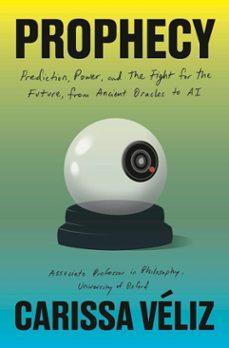
Todays computer scientists play the same role as the oracles of the ancient world and the astrologers of the Middle Ages. Modern predictions not only advise on war, crop output, and marriages, but algorithms and statisticians also now determine whether we can get a loan, a job, an apartment, or an organ transplant. And when we cede ground to these predictions, we lose control of our own lives.In this powerful, refreshing new look at the many ways prediction shapes our everyday lives, University of Oxford professor Carissa Veliz explains how putting too much stock in others predictions makes us vulnerable to charlatans, con artists, dubious technology, and self-deception. Examining a wide range of subjects both personal and societal, including medicine, climate, technology, society, and others, Veliz uncovers a number of insights: predictions about humans tend to be self-fulfilling; more data doesnt guarantee better outcomes; AI is more likely to increase risk than decrease it; and a free and robust society requires not more prediction, but better preparation.Veliz argues in this incisive and bracingly original book that the main promise of prediction is not knowledge of the future, but rather power over others. Prophecy is an invitation to defy those orders and live life on our own terms.
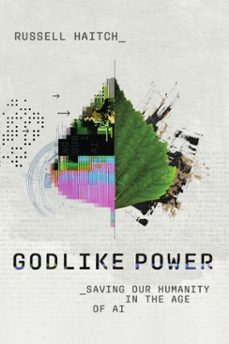
What Does It Mean to Be Human in the Age of AI? With all the hype and speculation around artificial intelligence, its most profound effects have yet to be revealed. The bigger question is not just what AI is doing to our jobs but to our soulsour relationships with God and one another.In Godlike Power, Russell Haitch cuts through the noise to tell the story of three core developments: the push to humanize machines, drawing us into emotional bonds with AIs; the drive to mechanize people, rooted in Enlightenment reason and the Industrial Revolution; and how God became human, so that humans could become more like Godand how techno-religion proposes a rival path to divinity. These three stories offer contrasting religious visions. Haitch argues we are now confronted with two rival paths to divinity, and we must choose the right one. Godlike Power argues that the third storythe Christian story of real people becoming like Godoffers the timeless and hopeful vision we need, allowing us to journey into the age of AI on a path that leads to life.AI is the latest chapter in humanitys Promethean quest for godlike power. But it is also a story about our perennial quest for intimacy. Even as AI technology rapidly changes, Haitch argues we need wisdomsomething more than superintelligenceto attain the power and love we long for.With Godlike Power, you can wisely examine AI through a theological lens, enabling you to engage thoughtfully and responsibly with how AI is reshaping our understanding of identity, truth, and what it means to be human.