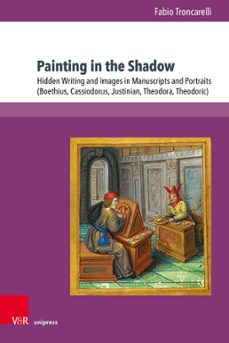
The almost invisible images of a hitherto unknown painter called Eusebius, who worked in San Vitale Ravenna and in Vivarium, are a gallery of portraits of his famous contemporaries such as Theodoric, Vitiges, Amalasunta and a visual commentary of Justinians tyrannical behaviour. Living between two ages, without belonging to either, this solitary man represents the fullest embodiment of a type of cultural "hybridisation" that is well attested throughout history. Eusebius is a spiritual brother of those "hybrid" artists, who have left extraordinary examples of "grotesques" populated by fantastic beings. After having embodied for so long the unbiased tolerance which had been the core of his own life and those of his companions in Ravenna: that mixture of confidentiality, intelligence, pointed irony, fantasy, and why not? touch of madness which had helped him to navigate through the troubled waters of his age, always leaving at the margins the demons who haunted him.
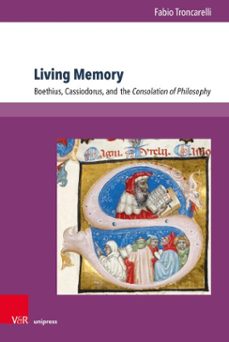
Fabio Troncarelli examines the Late Antique Cassiodorian edition of the "Consolation of Philosophy" by Boethius in this new study consisting of five chapters. The first one offers a brief sketch of the lives of the two protagonists of the story. The second concerns the medieval copies of the edition, some very close to the original archetype, preserving even its formal aspect, and the indication of its first transcription in Ravenna in the sixth century. The third chapter establishes a comparison between some typical rhetorical, philosophical, and editorial methods used by Cassiodorus and the ones found in Boethiuss edition. The fourth chapter explores possible reasons for Cassiodoruss decision to produce such an edition during the years of the collapse of Osthrogotic rule in Italy. The final chapter discusses the "living memory" of Boethiuss reputation at Vivarium and the relationships between his murder and Amalsuinthas murder as understood and covertly preserved by the Vivarian monks.
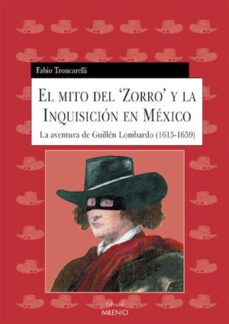
Fabio Trocarelli¿Quién se esconde detrás de la máscara romántica del Zorro? Un personaje histórico apasionante: Guillén Lombardo, nacido en Irlanda en 1615 con el nombre de William Lamport, un hombre de origen noble y con una vida repleta de aventuras. Despues de haber frecuentado la universidad, se instala en España, desde donde se embarca con destino a Mexico. Alli, en el año 1640, encuentra un mundo fascinante y a la vez terrible. Seducido rapidamente por la cultura indigena, se rebela contra las violencias cotidianas que los conquistadores españoles infligen a los indios y negros. Deseoso de justicia y libertad, Guillen Lombardo concibe un proyecto para organizar el levantamiento de las poblaciones sometidas a la esclavitud y colocar en la cupula de la Administracion mexicana a un gobernante elegido por el pueblo. Su audaz sueño se desvanece con la actuacion implacable de la Inquisicion. Es acusado de practicar magia y astrologia y arrestado en 1642. Permanecio en la carcel, entre torturas y privaciones de todas clases, durante 17 años. De sus ideales y de su lucha valiente han quedado numerosas composiciones poeticas que cantan la lucha contra la Inquisicion. Su figura ha dado origen a una leyenda, unida a su mascara y al nombre del Zorro, que, transformada en novelas y peliculas, simboliza la lucha contra la opresion y la burla de uan autoridad obtusa y arrogante.