Josephine Quinn es profesora de Historia Antigua en la Universidad de Oxford, y Martin Frederiksen profesor asociado y tutor en Historia Antigua en el Worcester College de Oxford. Es graduada por Oxford y por la Universidad de Berkeley, ha impartido clase en Estados Unidos, Italia y Reino Unido, y ha codirigido excavaciones arqueológicas de equipos formados por británicos y tunecinos en Útica. Es colaboradora habitual de la London Review of Books, así como de programas de radio y televisión. Es autora del premiado libro In Search of the Phoenicians.
Recibe novedades de Josephine Quinn directamente en tu email
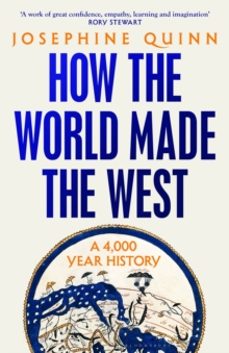
A Guardian Financial Times New Statesman The Rest is Politics and Waterstones Highlight for 2024 Quinn has done a lot more than reinvent the wheel What we have here is a truly encyclopaedic and monumental account of the ancient world THE TIMES A work of great confidence empathy learning and imagination RORY STEWART Bold beautifully written and filled with insights Extraordinary PETER FRANKOPAN One of the most fascinating and important works of global history to appear for many years WILLIAM DALRYMPLEThe West the story goes was built on the ideas and values of Ancient Greece and Rome which disappeared from Europe during the Dark Ages and were then rediscovered by the Renaissance But what if that isn t true In a bold and magisterial work of immense scope Josephine Quinn argues that the real story of the West is much bigger than this established paradigm leads us to believe So much of our shared history has been lost drowned out by the concept developed in the Victorian era of separate civilisations Moving from the Bronze Age to the Age of Exploration How the World Made the West reveals a new narrative one that traces the millennia of global encounters and exchange that built what is now called the West as societies met tangled and somet
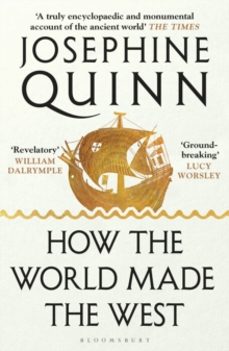
Ancient Greece and Rome have long been considered the parents of Western civilisation But the ancient world was a very wide one of conversation commerce and theft sex war and enslavement It was this restless global contact that built the West Why did Macedonian generals steal elephants from India to rule new realms How did the lewd graffiti left by foreign workers in Egypt form the basis of the alphabet In a voyage through space and time from the Levant of 2000 BC to the dawn of the Age of Exploration Josephine Quinn rewrites the story of the West and in doing so offers us a new history of our shared past A truly encyclopaedic and monumental account of the ancient world The Times Full of little gem likes shifts of perspective Guardian Scintillates with its focus on the unexpected Economist A work of great confidence empathy learning and imagination Rory Stewart This is in every way a big book TLS
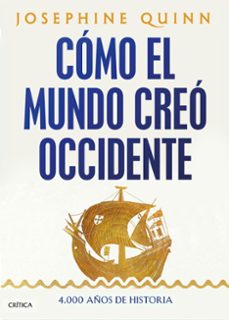
La historia global de occidente más allá de Grecia y Roma tejida por milenios de intercambios culturalesTradicionalmente se ha contado una historia de Occidente basada en las ideas y los valores clásicos, que se perdieron durante la Edad Media pero fueron redescubiertos en el Renacimiento. Pero, ¿y si eso no fuera cierto?Tras tres decadas de docencia e investigacion, Josephine Quinn sostiene que la verdadera historia de Occidente va mucho mas alla de Grecia y Roma. Gran parte de nuestra historia compartida se ha perdido, silenciada por las ideas victorianas que organizaron el mundo en civilizaciones separadas y, a menudo, diametralmente opuestas. Por este motivo, Quinn se propone contarnos una historia diferente: una que no comienza en el Mediterraneo grecorromano y luego resurge en la Italia del Renacimiento, sino que rastrea las relaciones que construyeron lo que ahora llamamos Occidente desde la Edad de Bronce hasta la Era de la Exploracion, como las sociedades se encontraron, se entrelazaron y, a veces, se separaron.Entender las sociedades de forma aislada empobrece nuestra vision del pasado y la comprension de nuestro propio mundo pues son el contacto y las conexiones, mas que las civilizaciones solitarias, los que impulsan el cambio historico. No son los pueblos los que hacen la historia, sino las personas.
A SUNDAY TIMES BESTSELLERBLACKWELL S BOOK OF THE YEAR 2021Essential lessons on the world we live in from one of our greatest young thinkers a guide to what everybody is talking about today Unparalleled and extraordinary A bracing revivification of a crucial lineage in feminist writing JIA TOLENTINO I believe Amia Srinivasan s work will change the world KATHERINE RUNDELL Rigorously researched but written with such spark and verve The best non fiction book I have read this year PANDORA SYKES How should we talk about sex It is a thing we have and also a thing we do a supposedly private act laden with public meaning a personal preference shaped by outside forces a place where pleasure and ethics can pull wildly apart To grasp sex in all its complexity its deep ambivalences its relationship to gender class race and power we need to move beyond yes and no wanted and unwanted We need to rethink sex as a political phenomenon Searching trenchant and extraordinarily original The Right to Sex is a landmark examination of the politics and ethics of sex in this world animated by the hope of a different one SHORTLISTED FOR THE ORWELL PRIZE 2022LONGLISTED FOR THE POLARI FIRST BOOK PRIZE 2022LONGLISTED FOR THE BRITISH ACADEMY
La historia global de occidente más allá de Grecia y Roma tejida por milenios de intercambios culturalesTradicionalmente se ha contado una historia de Occidente basada en las ideas y los valores clásicos, que se perdieron durante la Edad Media pero fueron redescubiertos en el Renacimiento. Pero, ¿y si eso no fuera cierto?Tras tres decadas de docencia e investigacion, Josephine Quinn sostiene que la verdadera historia de Occidente va mucho mas alla de Grecia y Roma. Gran parte de nuestra historia compartida se ha perdido, silenciada por las ideas victorianas que organizaron el mundo en civilizaciones separadas y, a menudo, diametralmente opuestas. Por este motivo, Quinn se propone contarnos una historia diferente: una que no comienza en el Mediterraneo grecorromano y luego resurge en la Italia del Renacimiento, sino que rastrea las relaciones que construyeron lo que ahora llamamos Occidente desde la Edad de Bronce hasta la Era de la Exploracion, como las sociedades se encontraron, se entrelazaron y, a veces, se separaron.Entender las sociedades de forma aislada empobrece nuestra vision del pasado y la comprension de nuestro propio mundo pues son el contacto y las conexiones, mas que las civilizaciones solitarias, los que impulsan el cambio historico. No son los pueblos los que hacen la historia, sino las personas.