
Imprescindibles
Más vendidos Libros más leídos eBooks más leídos Todos los libros Todos los libros Autores destacados Series y sagas
Recomendados Libros recomendados Autores destacados Libros que inspiran Vidas con historia LGTBIQ+ English books




Ficción
Literatura Contemporánea Estudios literarios Clásicos Cuentos Poesía Teatro Libros de bolsillo Sagas literarias
Géneros literarios Novela romántica y erótica Novela negra Novela histórica Narrativa fantástica Novela de ciencia ficción Novela de terror Narrativa de humor Narrativa de viajes
Literatura en otros idiomas Literatura en inglés Literatura en francés Literatura en otros idiomas internacionales


No Ficción
Ciencias y tecnología Biología Ciencias Ciencias naturales Divulgación científica Informática Ingeniería Matemáticas Medicina Salud y dietas Formación Idiomas Estilo de vida Libros de Cocina Guías de viaje Narrativa de viajes Deportes Libros de Juegos Manualidades
Humanidades Autoayuda y espiritualidad Ciencias humanas Derecho Economía y Empresa Psicología y Pedagogía Filosofía Sociología Filología Biblioteconomía Estudios filológicos Estudios lingüísticos Estudios literarios Historia y crítica de la Literatura



Infantil

Juvenil
#Jóvenes lectores Narrativa juvenil Clásicos adaptados Libros Wattpad Libros Booktok Libros de influencers Libros de Youtubers Libros Spicy Juveniles Libros LGTBIQ+ Temas sociales Libros ciencia ficción Libros de acción y aventura Cómic y Manga Juvenil Cómic Juvenil Manga Shonen Manga Shojo Autores destacados Jennifer L. Armentrout Eloy Moreno Nerea Llanes Hannah Nicole Maehrer
Libros de fantasía Cozy Fantasy Dark academia Hadas y Fae Romantasy Royal Fantasy Urban Fantasy Vampiros y hombres lobo Otros Misterio y terror Cozy mistery Policiaca Spooky Terror Thriller y suspense Otros
Libros románticos y de amor Dark Romance Clean Romance Cowboy Romance Mafia y amor Romance dramatico Romcom Sport Romance Otros Clichés Enemies to Lovers Friends to Lovers Hermanastros Slow Burn Fake Dating Triángulo amoroso

Cómic y Manga
Novela gráfica Novela gráfica americana Novela gráfica europea Novela gráfica de otros países Personajes, series y sagas Series y sagas Star Wars Superhéroes Cómics DC Cómics Marvel Cómics otros superhéroes Cómics Valiant
Cómics Libros de ilustración Cómic de humor Cómic erótico Historia y técnica del cómic Cómic infantil y juvenil Cómic infantil Cómic juvenil




Books in English 
Books in English Fiction Non Fiction Comic Teen & Young Adult Main Authors Ken Follett Agatha Christie Stephen King Jane Austen Maggie O’Farrell On sale
Books in English for Young Adults Age 13+ Age 15+ Young Adult Authors Rebecca Yarros Sarah J. Maas Brandon Sanderson Ali Hazelwood Alice Oseman



The Secrets Of Secrets
A thrilling and long-awaited new novel from Dan Brown
Audiolibros
Literatura Contemporánea Narrativa fantástica Novela de ciencia ficción Novela de terror Novela histórica Novela negra Novela romántica y erótica Historia Historia universal
Humanidades Autoayuda y espiritualidad Ciencias humanas Economía y empresa Psicología y pedagogía Filosofía Infantil Audiolibros infantiles
Ciencia y tecnología Ciencias naturales Divulgación científica Medicina Salud y dietas Arte Cine Música Historia del arte
eBooks
Literatura Contemporánea Narrativa fantástica Novela de ciencia ficción Novela de terror Novela histórica Novela negra Novela romántica y erótica Juvenil Más de 13 años Más de 15 años Infantil eBooks infantiles
Humanidades Autoayuda y espiritualidad Ciencias humanas Economía y Empresa Psicología y Pedagogía Filosofía Historia Historia de España Historia Universal Arte Cine Música Historia del arte
Ciencia y tecnología Ciencias naturales Divulgación científica Medicina Salud y dietas Filología Estudios lingüísticos Estudios literarios Historia y crítica de la Literatura Estilo de vida Cocina Guías de viaje Ocio y deportes



Preventa de eBooks de Antropología
Categorias
Filtros
Del 1 al 5 de 5

FRAMIS, ALICIA
VERGARA 9788410467835
El testimonio de la primera mujer del mundo en casarse con un holograma: una artista catalana.Descubre una historia revolucionaria en la que la frontera entre lo humano y lo artificial se difumina. Una union que desafia convenciones y despierta cuestionamientos profundos sobre la identidad, la intimidad y el significado del compromiso. Un libro que cuestiona los modelos de pareja y reflexiona sobre la soledad, la etica en la IA y la compañia como el nuevo oro del siglo XXII
Ver más
eBook
VERDON, MICHEL
Grosvenor House Publishing 9781836151166
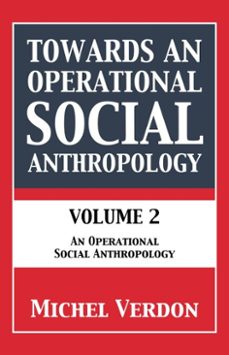
In volume 1, Professor Verdon sought to identify what crippled social anthropologys original project, that of understanding sociocultural variability. He found its cause in a universal, Aristotelian cosmology that renders groups ontologically variable to their principles of social organization, by defining them in terms of behaviour regulation. In this second volume, he develops a cure to that cosmological malaise: to define groups outside all behaviour regulation, and to define a separate group for every type of activity (unifunctional groups). From these two new cosmological requirements he sets out to define all the main concepts of social anthropology in what he calls an operational language (defined with respect to anthropologys aims, not as entities with intrinsic anthropological attributes): groups, corporations, descent, territoriality, lineages, segmentation, sovereignty and so on.He then applies this language to translate classical ethnographies operationally. He first chose the most famous ethnographies of so-called segmentary lineage societies, the Nuer (Sudan), Tallensi (Ghana) and Tiv (Nigeria), and then added the Berbers from the Rif (Morocco), the Yao (Malawi) and Australian Aborigines. All those societies were described as having descent groups. Translated operationally, ONLY ONE of them retains descent groups (the Tallensi). This leads him radically to transform the ethnographic landscape of social anthropology. Where all ethnographers saw descent groups almost everywhere, he finds them to be rare occurrences, now replaced with clientelistic social formations.Overall, setting out to define a set of etic (objective) concepts, he discovers that this language actually yields much better emic approaches to social organization (an approach closer to the actors subjective experience).
Ver más
eBook

GAZUR, BEN
The History Press 9781837052349
British food has an unsavoury global reputation, but the folklore which made it what it is can be traced back millennia. Folklorist Ben Gazur guides you through the dark alleys of British history to uncover how our food habits have been passed down through generations of traditions. Readers will get a taste of what life was life in a time when food was both magical ingredient and sustenance.Discover why we throw salt over our shoulder, why we think carrots help us see in the dark, when living snakes in pies were once the height of fashion at weddings, and why people risk life and limb to chase wheels of cheese down a hill.Hilarious and fascinating, A Feast of Folklore will introduce you to the gloriously eccentric folk who arent often noticed by historians. Here lies a smorgasbord of their dark remedies and deadly delicacies, waiting to be discovered.
Ver más
eBook

Hatje Cantz Verlag GmbH 9783775760034
Building on the premise that landscapes provide a common ground where different kinds of knowledge may come together, this edited volume draws on a wide range of disciplines, including geology and geography, cultural anthropology and philosophy, architecture and art history. It suggests that the complex social and environmental crises of the 21st century cannot be understood independently of a historically constituted aesthetic approach to landscapes.Boulouki is a collective that deals with the traditional knowledge of building. Under the Landscape (Santorini and Therasia, 2021 2022), one of the collectives most important projects, comprised a participatory restoration, research into local materials, an exhibition and a symposium, and is the basis and starting point of this publication.
Ver más
eBook
IVNIK, TINA
Ledizioni 9791256006434
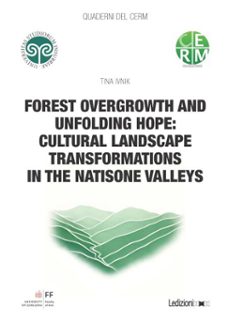
The monograph Forest Overgrowth and Unfolding Hope examines the transformation of the cultural landscape of the Natisone Valleys. This remote border region has undergone significant change from the second half of the twentieth century to the present day. What was once a predominantly agrarian society has been radically reshaped; formerly densely populated villages have emptied, and cultivated land has gradually been overtaken by forest.The monograph sheds light both on local understandings of these transformations and on the reasons behind them. To this end, it analyses the social memories of residents especially of the generation that was directly involved in these processes, observed them, experienced them, and made sense of them. It also offers a detailed account of past and present practices of care for four key landscape elements: meadows, chestnut trees, drystone terraces, and paths. While these elements were once essential for peoples survival, today they are acquiring new meanings. For some inhabitants, their overgrowth symbolizes the inevitable decline of the area; for others, it represents an opportunity to revitalize these places, inspiring hope for a better future for the Natisone Valleys.
Ver más
eBook
Del 1 al 5 de 5