Yehudi Menuhin is one of those rare men who is truly a legend in his own time. In rich and wonderfully candid detail, the great violinist tells the story of his life, recounting the defining moments in his crowded and fascinating journey that began when, as a small boy, he captivated the world. Here, too, Menuhin tells of his friendships and collaborations with Serkin, and also Benjamin Britten, Sibelius, Bartok, Glenn Gould, Casals, Heifetz, Sir Edward Elgar, Shostakovich, Piatigorsky. Indeed, a veritable "Who's Who" of the twentieth century musical world crosses these pages, as do such illustrious figures as Willa Cather, de Gaulle, Chaim Weizmann, Solzhenitsyn, and Pope John Paul II, for whom Menuhin played Bach's Chaconne at his summer residence in Castelgandolfo. Besides the personalities, Menuhin lets us enter the workshop of his craft, describing in some remarkable passages the exact methods in which he has made the opening of the Beethoven Concerto or a Mozart sonata a part of his own self. More recently, Menuhin has launched a great variety of projects dear to his heart - from the Yehudi Menuhin School in England to his International Music Academy for young graduate string players.
B. K. S. IyengarB.K.S. Iyengar's "Light On Yoga" is established now as the classic text for all serious students of yoga. It contains: a step by step photo-guide to routines for beginners to highly advanced; guide to yoga breathing; introduction to the philosophy behind the Yoga and a guide to healing specific health problems. It contains a new larger format an easier to read edition of this Yoga classic.
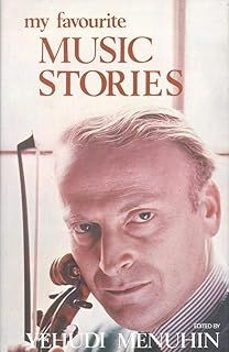
"Music, be it Beethoven, Bartok or the Beatles," writes Yehudi Menuhin, "brings us together in a sharing of sound and feeling" which transcends boundaries. Thus, through the stories, poems and accounts in this anthology, we may join African slaves in 19th-century New Orleans as they create their spontaneous, vital, rhythmic music; and may walk with the exiled Bartok as he remembers the joyful honesty, and the vigorous tenderness, of the songs of Hungary. Exemplified in these stories is the deep attachment of composer and musicians to the land of their roots - "the lands that gave them their ears, their voices, the particular musical language they use." Here are stories illustrating the music of men and women living 'in tune' with the earth: Aborigine and Inuit, Bushman and American Indian; a woman singing to the Hebridean seals, whose voices answer hers; a Celtic prince entranced by 'the music of the world'. Here are composers and conductors, makers and lovers of music from other times and other countries, other cultures and other landscapes. The lilt of Gypsy music and the haunting chants of the Balkans; girls dancing in Rhodes, and children dancing in a Japanese grove; the songs of a Somerset soldier and of the peasants in Russia; the discipline and complex beauty of Indian music and the deep sense of melody in Hasidic tales: all these illuminate the infinite range of music, within which we may, each retaining perfect individuality, share a universe "in which music and life are one and the same thing".
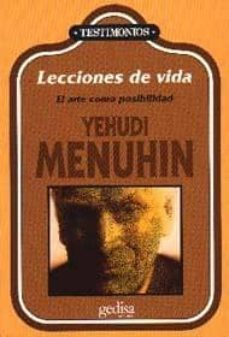
De sorprendente niño prodigio a joven músico judío que visita conmocionado Israel y Alemania tras el holocausto, de activo defensor de la paz y la reconciliación entre los pueblos a descubridor de la espiritualidad oriental como camino para la suprema creacion y la verdadera sabiduria, la vida de Yehudi Menuhin es testimonio tanto de la fe en el arte como de las posibilidades del ser humano para alcanzar a traves del pensamiento y la vivencia artistica y creativa una armonia plena consigo mismo y con su entorno natural.